
Short Programme Fit Out
When the date will not move
Some office works have a date that cannot move. A lease starts, a team arrives, an auditor visits, or a landlord’s access window opens for three days and then closes. Beem Interiors runs short programme fit out and refurbishment across London for exactly those jobs — work that has to be finished by a fixed date, usually in a building that is still occupied.
A short programme is not a normal job done faster. It is a different way of planning: long lead-time items ordered or substituted before anything starts on site, trades sequenced so two can work at once rather than queuing behind each other, and the works broken into phases that each hand back something usable. Get that wrong and the programme slips in the first week, whatever anyone promised at tender.
Most of what we do sits between a single meeting room and one floor. That is the scale at which short programmes are actually achievable, and the scale at which a main contractor’s preliminaries and lead times make them impossible.
Where short programmes go wrong
Almost every overrun we are asked to rescue comes down to one of these:
Almost every overrun comes down to one of these: ● Long lead-time materials — glazed partition systems, specials, some floor finishes ● Single-trade sequencing, where each trade waits for the last to finish the whole floor ● No out-of-hours allowance, so work stops the moment the office opens ● Building access — goods lift bookings, loading bay slots, out-of-hours permits ● Landlord consent applied for too late ● Power, data and air conditioning left until after the walls are up
What fits in the time
Rough guides, assuming we have access and a decision on finishes.
A weekend. Redecoration of a floor or a large room, carpet tiles or LVT in a single area, a tea point refresh, minor power and data moves, furniture reconfiguration — anything that does not depend on a material with a lead time.
One to two weeks. A meeting room or two in solid partition, a boardroom refit, ceiling and lighting alterations across part of a floor, a full redecoration with making good, or a small dilapidations strip-out.
Three to six weeks. Glazed partitioning to a floor, a partial refit of a single floor, air conditioning alterations, or a full small-office refurbishment carried out in phases around the people using it.
The variable is almost never the labour. It is the lead time on the one item nobody checked, and whether we are allowed to work outside your hours.
How long do short-programme projects take?
Fast does not mean rushed, but it does mean decisions are made quickly and the work is sequenced carefully. As a guide:
- A single room redecorated, re-carpeted or re-lit: one to five days.
- A meeting room formed with new partitions: usually one to two weeks once the system is on site.
- A refresh of 1,000 to 2,000 sq ft, with decoration, flooring and lighting: often two to three weeks.
- A full single floor: from around four to eight weeks, depending on services and consents.
What you cannot compress is just as important. A licence to alter often takes four to eight weeks, and made-to-order items such as glazed partitions can take four to eight weeks to arrive and bespoke joinery longer. Our guide to how long an office fit-out takes and week-by-week refurbishment guide set out the realistic sequence.
What speed costs
Working to a tight deadline can add cost, so it helps to know where. Out-of-hours and weekend working commonly adds 10 to 20 per cent to the affected work. Expediting materials, extra labour and working in short phases can also raise the price. The most effective savings come from deciding early, ordering long-lead items at once and keeping the scope fixed. Our small office refurbishment costs page shows how rates behave on small projects.
How to protect a fixed date
- Agree the scope and the layout before work starts, and freeze it before first fix.
- Start the landlord consent as soon as the scope is known. See our guide to the licence to alter.
- Order partitions, floor finishes and any joinery on the day you approve the quote.
- Agree access, lift booking, parking and permits in advance.
- Nominate one person on your side who can make decisions the same day.
- Hold a small contingency for surprises such as asbestos or hidden services. Our post on the hidden costs of an office refurbishment lists the usual items.
Staying open while the work happens
Most short-programme jobs are done in offices that stay in use. We phase the work zone by zone, agree quiet periods and protect common parts. Our guide to keeping working during a refurbishment covers it in detail.
Lease-end deadlines
If your deadline is a lease break or expiry, plan backwards from handback. A typical Category A reinstatement takes four to eight weeks on site, so we like at least eight to twelve weeks before the end of the term. See our dilapidations and end-of-lease works service.
Common questions
Can you work to a date that will not move?
Often yes, if the scope is clear and the long-lead items and consents are started early. We will tell you straight away if a date is not realistic.
How quickly can you quote?
Usually within a few working days of a site visit.
Do you work weekends and evenings?
Yes, where the building allows it. Expect a premium on the affected work.
What are the main reasons short programmes slip?
Late landlord consent, long-lead items ordered after the programme was set, discoveries in the building and changes of mind after first fix.
Can you do small works as well as a larger refurbishment?
Yes. See our decoration and small works page.
Our Work

Office Kitchen Refurbishments
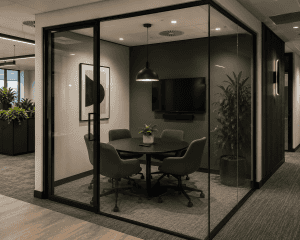
Glass Partitioning Works

Office Reception Refurbishment
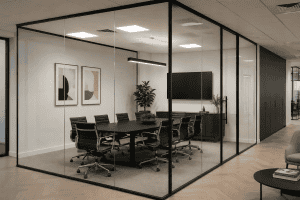
Office Fit Out Contractor
How we run it
Evenings, weekends and phased handover
Most short programmes only work because the noisy, dusty and disruptive work happens when the floor is empty. We plan the week around your working hours rather than ours: strip-out and drilling out of hours, quieter finishing trades during the day, and each area handed back clean before the next is opened up. Dust screening, floor protection and an end-of-shift clean are part of the price, not an extra.
One point of contact, and a programme you can hold us to
You get a written programme before we start with the dates that matter marked on it — when a decision is needed from you, when a long-lead item has to be ordered, and when each phase hands back. If something slips you hear it the same day rather than at the end. One person runs the job, so you are not coordinating trades or chasing a supplier.
If your date is genuinely immovable, say so at the first visit. It changes how we buy, how we sequence, and occasionally whether we take the job — and that is far better established before anyone is on site. For larger or less urgent work, see partial office fit out, office refurbishment and small works.