If you have only ever seen fit-out costs quoted as a single figure or a rate per square foot, it can be hard to know whether a price is fair. An office fit-out cost breakdown pulls that single number apart and shows you where the money actually goes — from partitions and power to furniture and fees. For a London SME planning its first move or refurbishment, understanding the parts makes it far easier to set a realistic budget, compare quotes fairly and decide where to spend and where to save.
Office work is usually quoted per square foot. As an indicative guide for 2026, a basic fit-out tends to fall around £40–65 per sq ft, mid-range around £65–120, and high-spec £150 and up. Those are ranges to plan around, not quotes — the breakdown below explains what moves you up or down within them.
What goes into an office fit-out cost breakdown?
A typical scheme divides into a handful of big buckets: construction and partitioning; mechanical and electrical services; finishes such as flooring and ceilings; furniture and joinery; technology; and the professional fees that tie it together. The rough share each takes varies with your building and ambitions, but knowing the categories helps you read any quote you are handed.
Construction and partitioning
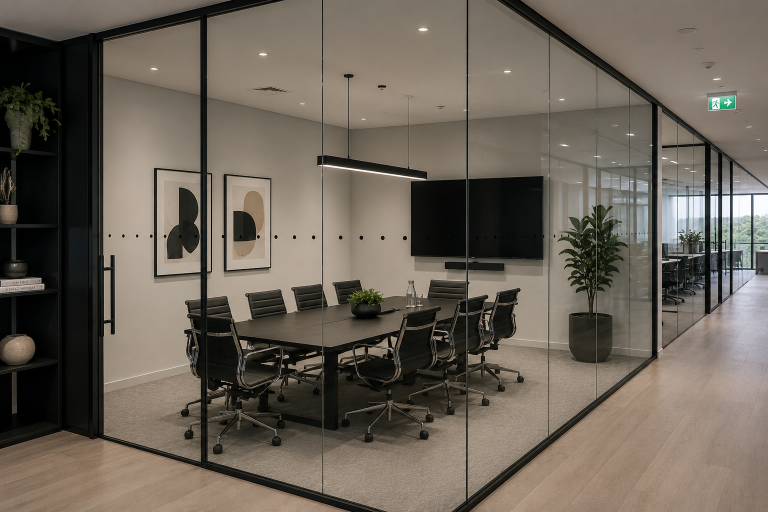
This is the physical shape of your office: meeting rooms, offices, dividing walls and doors. Partitioning is one of the biggest single variables. Solid stud walls are the most economical, glass partitions cost more but bring in light, and demountable systems sit in between while giving you flexibility for the future. The more rooms you carve out of an open floor, the more you spend here.
Mechanical and electrical (M&E)
Often the most underestimated part of a fit-out, M&E covers heating and cooling, ventilation, power, lighting and fire and security systems. It regularly accounts for a quarter to a third of the total, and it is largely hidden — which is exactly why cheap quotes so often skimp here. Reworking air conditioning or adding a lot of new power and data points can move your budget significantly.
Flooring, ceilings and decoration
The finishes you see and touch every day. Carpet tiles remain the workhorse office floor, with luxury vinyl tile (LVT) popular in kitchens and breakout areas. Ceilings might be a refreshed suspended grid or a more industrial exposed look, and decoration covers preparation and painting throughout. Individually modest, these add up across a whole floor.
Furniture, joinery and finishes
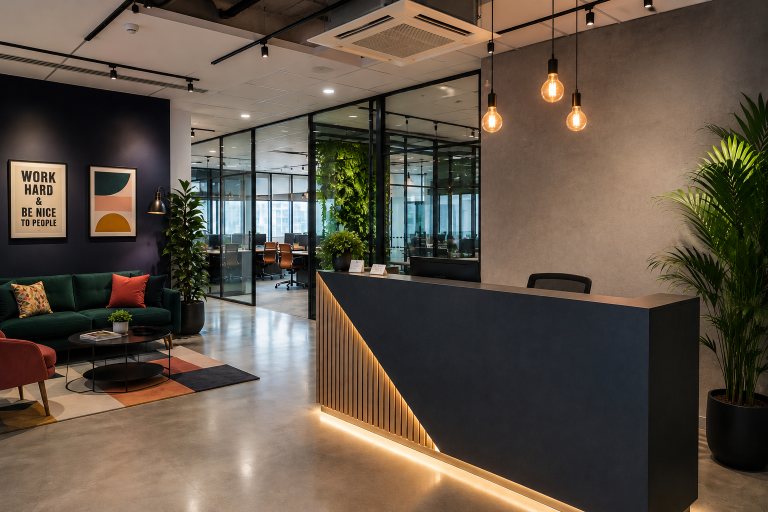
Desks, chairs, storage and soft seating, plus the bespoke joinery that gives an office its character — a reception desk, a tea point, fitted storage. Furniture is one of the easier places to flex a budget up or down, and reusing good existing pieces is a legitimate way to save without the space looking tired.
Technology and data
Structured cabling, Wi-Fi, screens in meeting rooms, and audio-visual kit for hybrid calls. This is frequently supplied by a separate specialist, so it is easy to leave out of an early budget — and just as easy to under-scope. Agree who is responsible for cabling and connectivity before work starts.
Professional fees and project costs
Design, space planning, M&E design, project management and building control all sit here, along with a contingency for the unexpected. On a leased office you may also face landlord consent costs — a licence to alter, and the landlord’s professional fees charged back to you. These commercial and lease-side items are exactly the ones budget quotes tend to omit, so check they are accounted for.
So where does the money actually go?
Every project is different, but a mid-range office fit-out often splits roughly like this:
- Mechanical and electrical services: around a quarter to a third of the budget.
- Partitioning and construction: a fifth to a quarter.
- Flooring, ceilings and decoration: roughly ten to fifteen per cent.
- Furniture and joinery: ten to twenty per cent, depending on how much you reuse.
- Technology and data: five to ten per cent.
- Professional fees and contingency: ten to fifteen per cent.
Treat those as a sense-check rather than a rule. If a quote is heavily weighted away from M&E, ask what has been assumed about your building’s existing services — that is often where hidden cost hides.
How to use a cost breakdown when comparing quotes
The real value of a breakdown is that it lets you compare like with like. When each quote is itemised, you can see instantly whether a lower price reflects genuine efficiency or simply a smaller scope. Ask every contractor to present costs the same way, and to state clearly what is excluded, so you are comparing the same job rather than the same headline number.
Want a line-by-line breakdown for your own office rather than a single lump-sum figure? Beem Interiors gives every client an honest, itemised quote — including the lease and commercial costs others leave out — so you can see exactly where your money goes. Get in touch for a no-obligation chat.
Where can you save without cutting corners?
Once you can see the breakdown, the sensible savings become obvious — and they are rarely the ones people reach for first. Reusing sound furniture, keeping the existing partition layout where it still works, and choosing hard-wearing mid-range finishes rather than premium ones all trim cost without hurting the day-to-day experience. The place not to cut is mechanical and electrical: skimping on power, data or cooling tends to cost more later in reworks and disruption. As a rule of thumb, spend where you touch the building every day and where changes are hard to reverse, and save on the decorative extras that are easy to upgrade down the line.
It also pays to phase the work. If budget is tight this year, a good contractor can help you stage a fit-out so the essentials are done now and the nice-to-haves follow, rather than compromising the whole scheme at once.